
Invest in Technology Trusted by NASA and the U.S. Military
Since 2002, Infinity Fuel has secured $60 million in contracts and licensing agreements with government and commercial customers. Now, individual investors have the opportunity to own a piece of the company's next chapter.







3 Reasons to Invest in Infinity Fuel
The Right Stuff
Infinity has worked with NASA, the U.S. Navy and Air Force, the FAA, and commercial space and underwater companies. Today, the company has ongoing projects across government, space, and underwater markets.
The Right Markets
Space and underwater missions demand more range, endurance, and reliability than batteries can always provide. Infinity's hydrogen systems are built for these difficult environments, giving the company access to growing markets where power is a critical constraint.
The Right Traction
Infinity has spent more than two decades turning its technology into real-world programs, securing more than $60 million in completed or ongoing contracts since its founding in 2002. Today, we have ongoing projects with NASA, the U.S. Navy, commercial space companies, and a commercial underwater company.
Our Technology Has Already Left the Lab
2,023 km
385 hours
2,600+
2 Launches
Where Batteries Reach Their Limits, Hydrogen Creates Opportunity
For batteries, doubling runtime means doubling battery size and weight, which means a bigger vehicle that needs even more battery. The same rules do not apply to hydrogen fuel cells. Our fuel cell delivers more power while staying one fixed size.
Space: Reducing the Cost of Power Beyond Earth
The lunar night lasts more than 14 Earth days, creating a major energy-storage challenge for sustained lunar operations. Batteries add significant weight and launch cost. NASA calculates a solar/hydrogen regenerative fuel cell system could save up to $700 million per mission over batteries.7

Underwater: Extending Missions While Reducing Support Costs
Battery capacity limits how far autonomous underwater vehicles can travel before needing to surface or recharge. An Infinity-powered Cellula Robotics Envoy AUV recently completed a 2,023 km mission while submerged for 385 continuous hours, proving the potential for longer missions with fewer constraints.


Power Generation, Energy Storage, and More
Infinity develops fuel cells, electrolyzers, and regenerative fuel-cell systems that can work independently or together across space, underwater, and terrestrial applications.
Fuel Cells
Our fuel cells combine hydrogen and oxygen to generate electricity and water, providing continuous power for applications where batteries can limit range or endurance.
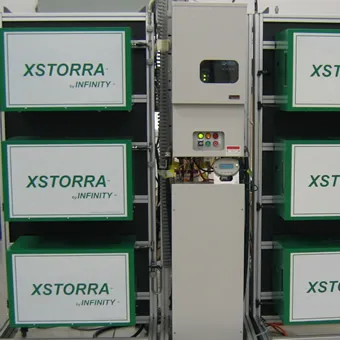
Electrolyzers
Infinity electrolyzers produce 99.999% pure hydrogen and oxygen at up to 2,000 psi without an external compressor—eliminating the capital and operating requirements associated with separate compression equipment.
In space, the same technology can also produce oxygen for life-support applications. Infinity is working with a commercial space-station company on applications of this technology.

Regenerative Fuel Cells
Combined, our fuel cells and electrolyzers form a regenerative fuel-cell system. Renewable electricity can generate and store hydrogen and oxygen, which can later be converted back into electricity when solar or other renewable power isn't available.
An Integral Part of NASA’s Lunar Surface Plans
2
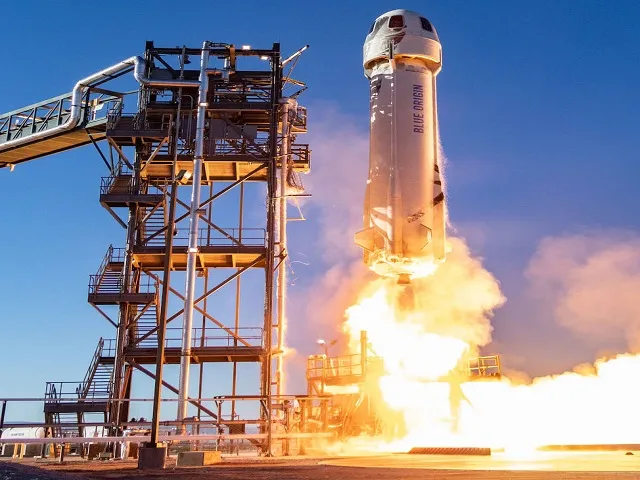
Blue Origin New Shepard launches where Infinity fuel-cell technology has operated in flight.
2,600+
hours of NASA life testing completed on lunar fuel-cell stacks.
Active
NASA Glenn contract for regenerative fuel-cell stacks.
2
commercial lunar-lander companies working with us on fuel-cell and electrolyzer applications.
Game-Changing Advances for the US Navy and Commercial Underwater Drone Missions
2,023 km Mission
Beyond
$100K/day
We’ve Averaged 20% Gross Profit and $5.0 Million in Revenue Over the Past 4 Years
Our markets are cyclical. Infinity is agile, and we respond rapidly as market opportunities emerge.

How Our Products Work
We make Fuel Cells, Electrolyzers and Regenerative Fuel Cells (RFCs).
Our fuel cells turn two inputs (hydrogen and oxygen) into two outputs (electricity and water). The electricity powers our fuel cells’ applications.
Our electrolyzers provide the capability to break the water back into hydrogen and oxygen to start the process over.
Combined, they comprise an RFC that can be used to store energy. Powered by renewable electricity, our electrolyzers can generate and store large amounts of green hydrogen and oxygen. This can then be used in our fuel cell to make electricity when the renewable source is not available.
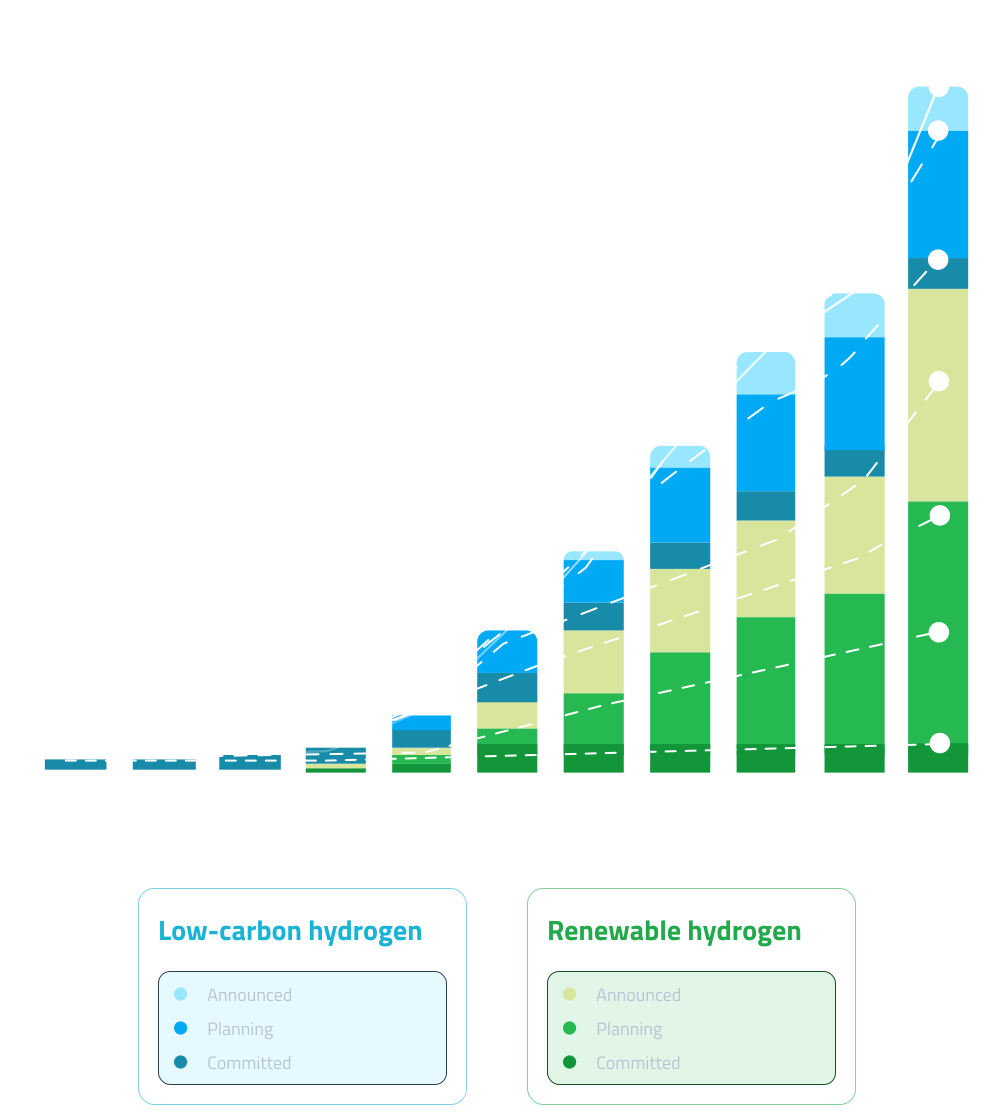
Our Markets Are Projected to Show Massive Growth Over the Next 10 Years8

$10B+
military AUV segment by 2030 fastest growing segment of the naval defense market ($10.17B, 10.2% CAGR) 5
$170B
lunar economy by 2040 (€142B, PwC Lunar Market Assessment)6
$406B
terrestrial microgrid market by 2033
(4X projection from 2025)9

Advisors

William Shatner
- World-Renowned Celebrity
- Passenger on Blue Origin New Shepard Flight in 2021
- Advocate for reducing earth's carbon footprint & building a sustainable planet
Exclusive Investor Perks
The Right Stuff
Our seasoned leadership team embodies deep industry expertise and technological know-how. Past and current members of our team have been involved in every space flight fuel cell program since Project Gemini in the 1960’s through today.


• 30+ years experience UTC/Proton
• Co-founder Proton Energy systems
• Proton: VP Business Development
• NASDAQ IPO 2000
• Founder of Infinity
• UCONN- Physics
• UMASS MBA
• 12 Patents

• Over 30 years experience working in many different industries.
• General Accounting
• Financial Reporting
• Budgeting and Project Management
• HR program manager

• 10+ years fuel cell experience at Infinity
• Design and Test Engineer lead engineer for designing and testing fuel cell components, stacks, systems
• BS in Mechanical Engineering from the University of Connecticut

• M.S. in management in engineering from University of Connecticut
• Lead engineer at Infinity® on Office of Naval Research UUV project
• Received certificate of appreciation from NASA for work on the AMPES tipping-point project
.webp)
• 30+ years in Power and Electrical Design
• Specializes in Power & Control (Analog & Digital Embedded)
• Power Electronic Converters/Inverters/Motor Drives
• Designs Deployed in Space, Undersea, & Industrial Applications
• MSEE in Power Electronics from Worcester Polytechnic Institute

• Expert in Contract and Administrative Law
• B.A., Economics, University of Connecticut
• J.D., Western New England University
• Also routinely handles Trademark, IP, Development, and Compliance activities for Infinity®
• World-Renowned Celebrity
• Passenger on Blue Origin New Shepard Flight in 2021
• Advocate for reducing earth's carbon footprint & building a sustainable planet
* Section 17(b) disclosure. Mr. Shatner is compensated as an Infinity advisor at $10K/month. He also has received options to purchase up to 100K shares vesting over 9 months at an $8.00/share strike price
Frequently Asked Questions
Why invest in startups?
Regulation CF allows investors to invest in startups and early-growth companies. This is different from helping a company raise money on Kickstarter; with Regulation CF Offerings, you aren’t buying products or merchandise - you are buying a piece of a company and helping it grow.
How much can I invest?
Accredited investors can invest as much as they want. But if you are NOT an accredited investor, your investment limit depends on either your annual income or net worth, whichever is greater. If the number is less than $124,000, you can only invest 5% of it. If both are greater than $124,000 then your investment limit is 10%.
How do I calculate my net worth?
To calculate your net worth, just add up all of your assets and subtract all of your liabilities (excluding the value of the person’s primary residence). The resulting sum is your net worth.
What are the tax implications of an equity crowdfunding investment?
We cannot give tax advice, and we encourage you to talk with your accountant or tax advisor before making an investment.
Who can invest in a Regulation CF Offering?
Individuals over 18 years of age can invest.
What do I need to know about early-stage investing? Are these investments risky?
There will always be some risk involved when investing in a startup or small business. And the earlier you get in the more risk that is usually present. If a young company goes out of business, your ownership interest could lose all value. You may have limited voting power to direct the company due to dilution over time. You may also have to wait about five to seven years (if ever) for an exit via acquisition, IPO, etc. Because early-stage companies are still in the process of perfecting their products, services, and business model, nothing is guaranteed. That’s why startups should only be part of a more balanced, overall investment portfolio.
When will I get my investment back?
The Common Stock (the "Shares") of Infinity Fuel Cell and Hydrogen, Inc. (the "Company") are not publicly-traded. As a result, the shares cannot be easily traded or sold. As an investor in a private company, you typically look to receive a return on your investment under the following scenarios: The Company gets acquired by another company. The Company goes public (makes an initial public offering). In those instances, you receive your pro-rata share of the distributions that occur, in the case of acquisition, or you can sell your shares on an exchange. These are both considered long-term exits, taking approximately 5-10 years (and often longer) to see the possibility for an exit. It can sometimes take years to build companies. Sometimes there will not be any return, as a result of business failure.
Can I sell my shares?
Shares sold via Regulation Crowdfunding offerings have a one-year lockup period before those shares can be sold under certain conditions.
Exceptions to limitations on selling shares during the one-year lockup period:
In the event of death, divorce, or similar circumstance, shares can be transferred to:
• The company that issued the securities;
• An accredited investor;
• A family member (child, stepchild, grandchild, parent, stepparent, grandparent, spouse or equivalent, sibling, mother-in-law, father-in-law, son-in-law, daughter-in-law, brother-in-law, or sister-in-law, including adoptive relationships).
What happens if a company does not reach their funding target?
If a company does not reach their minimum funding target, all funds will be returned to the investors after the close of the offering.
How can I learn more about a company's offering?
All available disclosure information can be found on the offering pages for our Regulation Crowdfunding offering.
What if I change my mind about investing?
You can cancel your investment at any time, for any reason, until 48 hours prior to a closing occurring. If you’ve already funded your investment and your funds are in escrow, your funds will be promptly refunded to you upon cancellation. To submit a request to cancel your investment please email: info@dealmakersecurities.com
How do I keep up with how the company is doing?
At a minimum, the company will be filing with the SEC and posting on its website an annual report, along with certified financial statements. Those should be available 120 days after the fiscal year end. If the company meets a reporting exception, or eventually has to file more reported information to the SEC, the reporting described above may end. If these reports end, you may not continually have current financial information about the company.
What relationship does the company have with DealMaker Securities?
Once an offering ends, the company may continue its relationship with DealMaker Securities for additional offerings in the future. DealMaker Securities’ affiliates may also provide ongoing services to the company. There is no guarantee any services will continue after the offering ends.
What is Infinity Fuel's pre-money implied valuation?
Infinity Fuel's pre-money implied valuation is $65,588,548. The implied valuation was calculated by multiplying the total number of shares outstanding (TSO) by the price per share offered in this raise. This is a pre-money implied valuation — meaning it reflects the company's value before any new funds raised in this offering are added.